Streetery Furniture and Seasonal Storage: Planning Curbside Dining That Comes Apart (2026)
How to choose roadway and sidewalk dining furniture that meets program rules, knocks down for winter and stores compactly, plus a step-by-step close-down checklist.
Short answer
Streetery furniture has to satisfy two calendars: the city's permit rules during the season and your storeroom when the season ends. Choose seating that two staff can assemble and dismantle without tools, that drains and stands off the road surface, that integrates the barrier, planter or curb crossing your program requires, and that flat-packs or stacks into a known storage volume. Clean, dry and inventory everything before it goes into storage.
A "streetery" (curbside, roadway or parklet dining) turns a parking lane or sidewalk strip into paid seating. Many US and European cities have moved these from emergency measures to permanent programs with design standards, fees and seasonal windows. This guide by Alfresco Seat (a line by EASEN Commercial Furniture) covers the furniture side: what to buy, how it should be built, and how to put it away.
What do streetery programs typically regulate?
Every city writes its own rules, and they change. Treat the list below as the questions to ask, not the answers. Always work from your city's current design guide.
| Topic | What programs commonly address | Furniture impact |
|---|---|---|
| Season | Roadway dining may be limited to part of the year; sidewalk cafés may run longer | Furniture must be removable and storable |
| Barriers | Protective barriers along traffic, sometimes water-filled or of minimum weight | Ballasted booths or separate barriers |
| Drainage | Gutter and curb drainage kept clear | Raised bases, bridged crossings |
| Accessibility | Level, firm surfaces, ramps or curb transitions | Platform heights, crossing details |
| Height and visibility | Limits on wall and barrier heights, sightlines at corners | Booth back heights, planter heights |
| Clearances | Distances from hydrants, crosswalks, bus stops, driveways | Run lengths, end units |
| Roofs and enclosures | Restrictions on fixed roofs and enclosed walls | Umbrellas, screens that are not walls |
| Materials | Fire-resistant fabrics for umbrellas or canopies, no hazardous attachments | Fabric choice, heater detailing |
New York City's permanent Dining Out NYC program is a well-known example: roadway cafés are allowed only for part of the year, while sidewalk cafés can operate year-round. Check the current dates and rules for your city before you order.
Furniture types that work in curb lanes
Ballasted booth-barriers
If the program requires a weighted barrier, combining barrier and seating saves a strip of width and a second purchase. A booth whose street-facing back is a sealed shell with a water ballast chamber, such as our Ballast-Wall Curbside Booth, ships empty and is filled on site, then drained for removal.
Knock-down booths
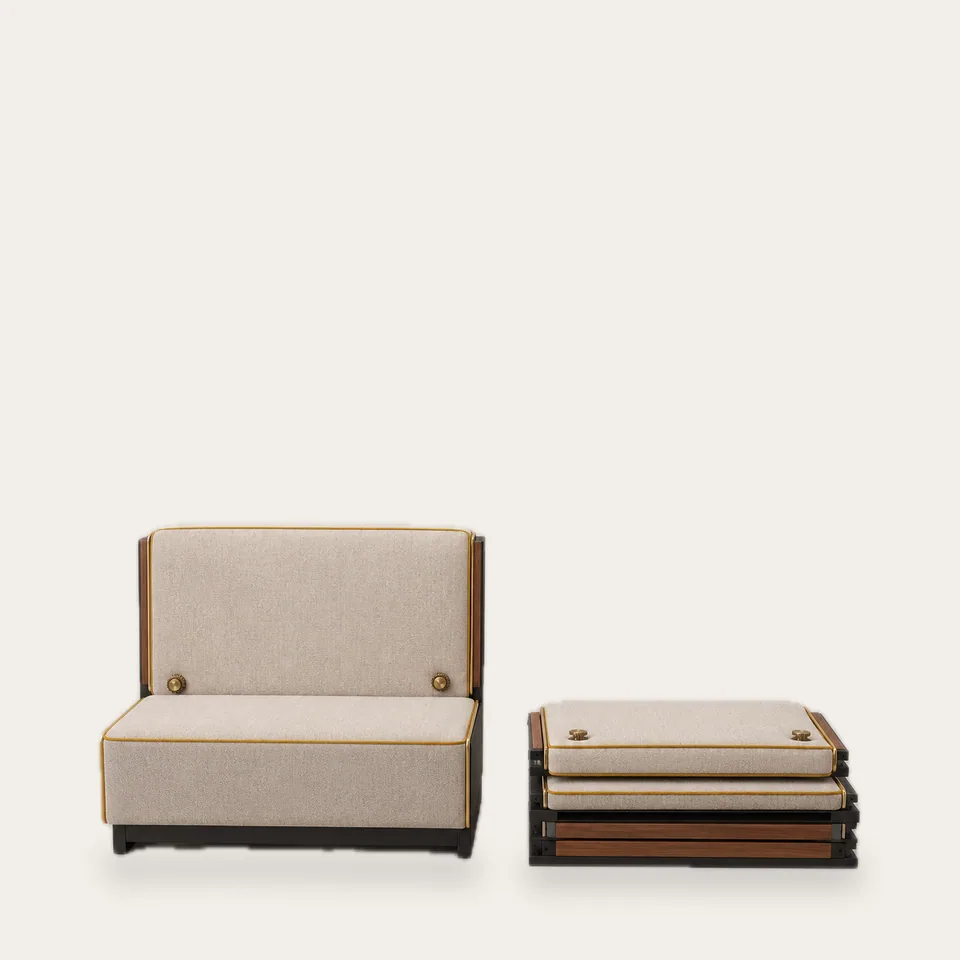
Welded booths are strong but awkward to move. Knock-down booths assemble from panels with locating pins and hand knobs, so two people can install or remove a run without tools. Our Fold-Down Seasonal Booth stacks to about 11 in (280 mm) per section with its heaviest part around 40 lb (18 kg).
Planter-backed seating
Where hard barriers are not permitted on sidewalks, planters can define the café zone. A planter built into the booth back does both jobs.
Lockable and anchored runs
For seating left out overnight, two sections locked into one run and anchored to the surface cannot be carried away. Drilling a sidewalk or roadway needs permission from the city or property owner.
Loose stacking chairs and tables
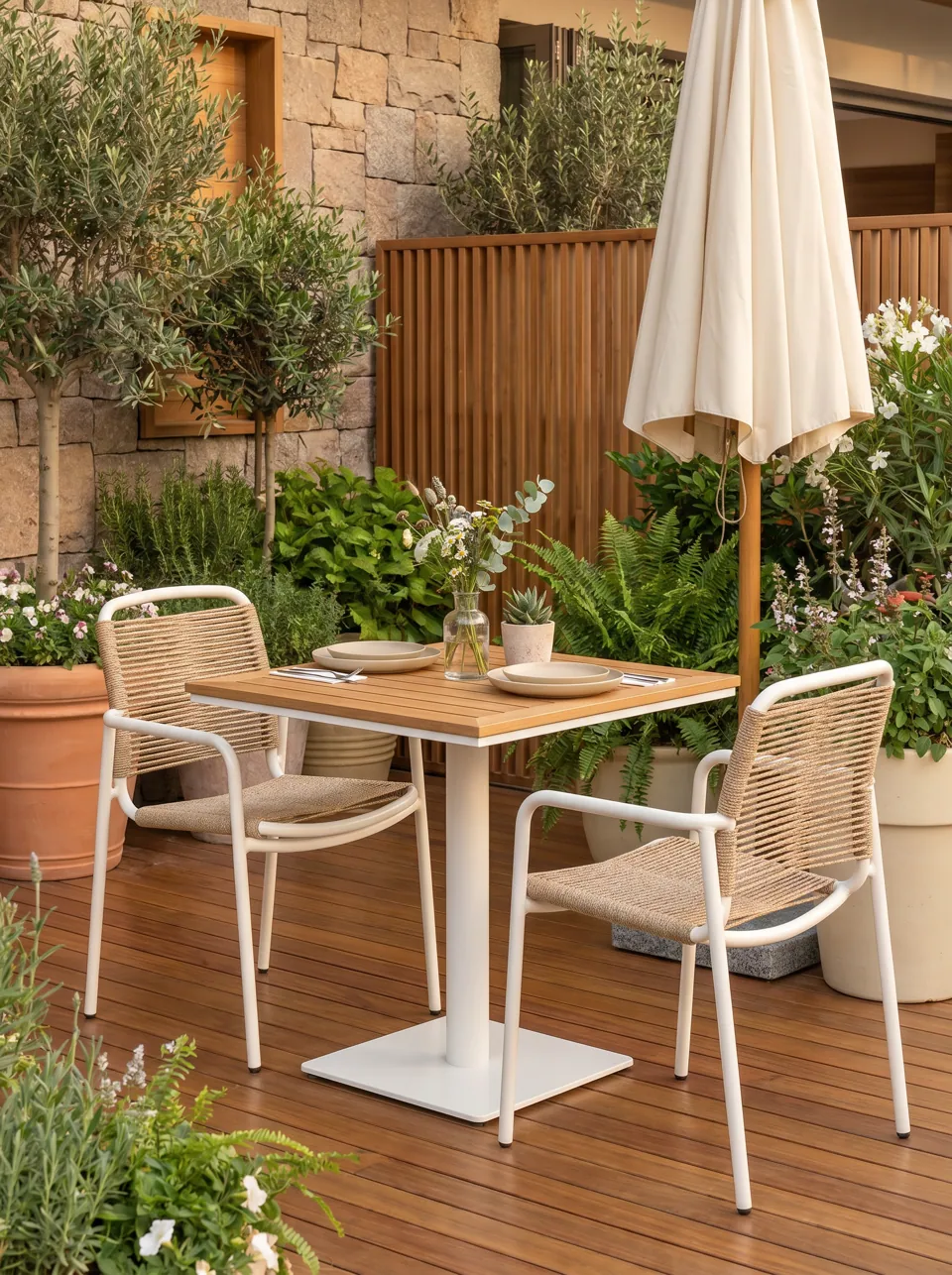
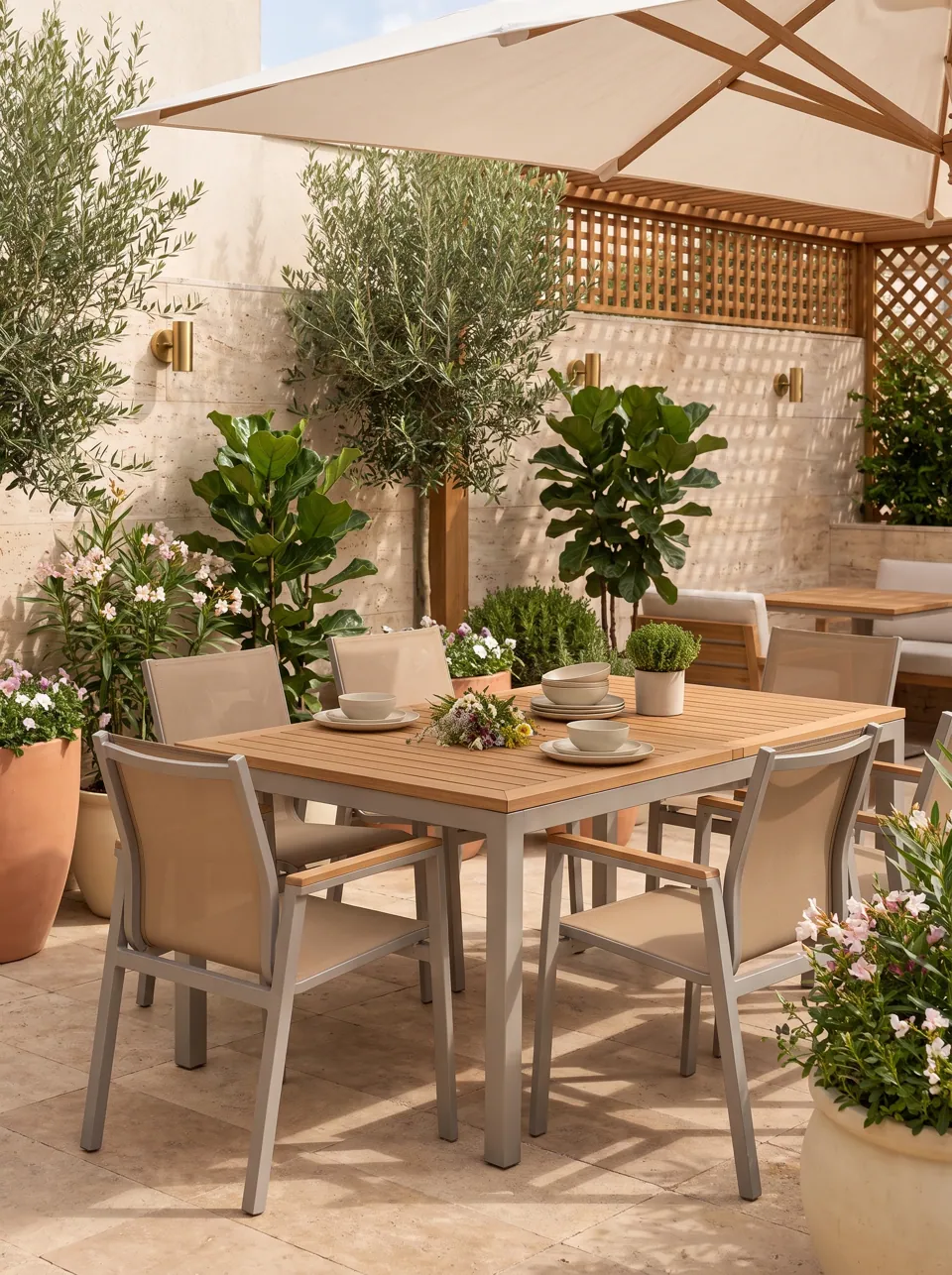
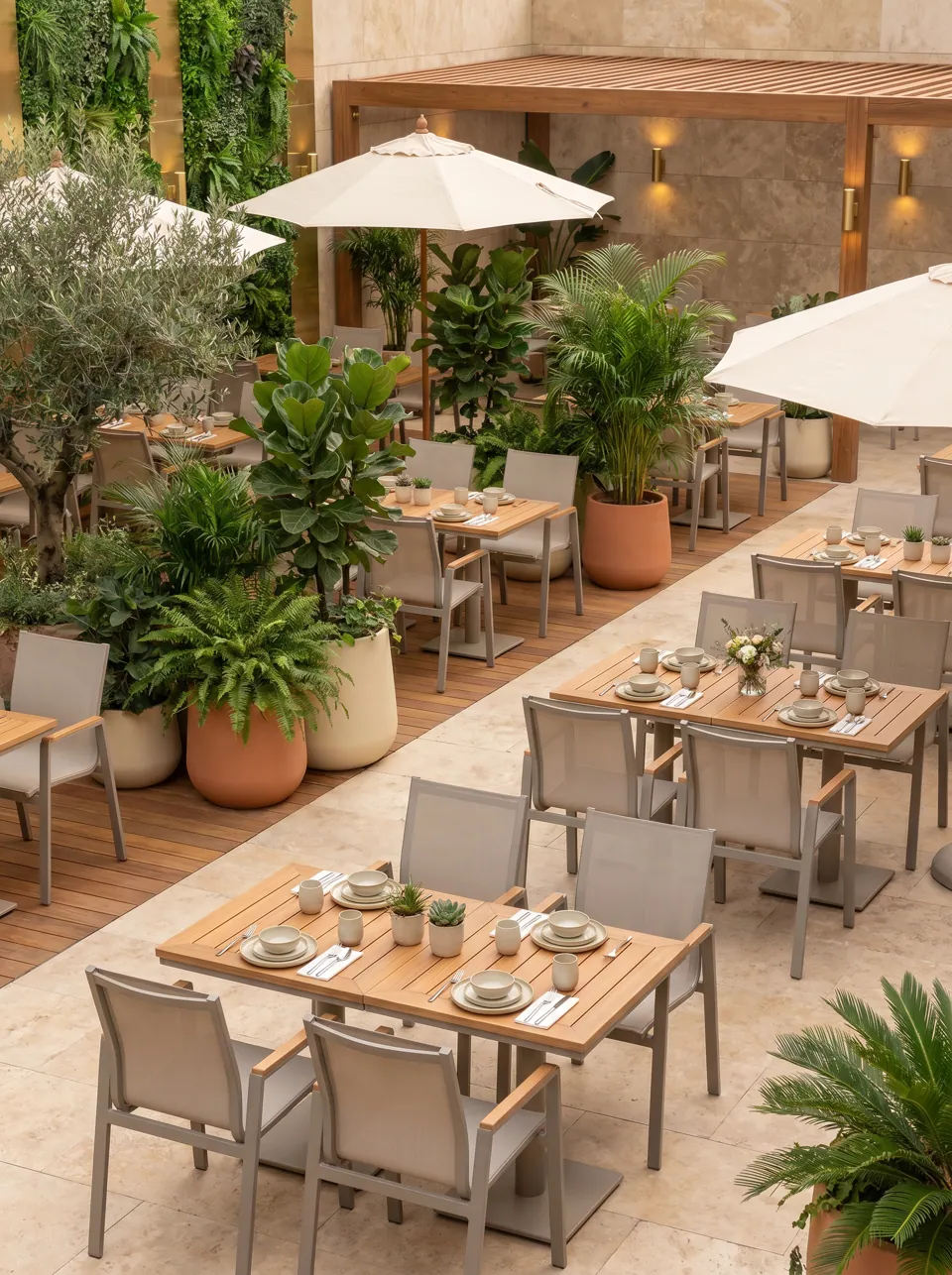
Stacking aluminum chairs and pedestal tables remain the flexible core of most streeteries. See our aluminum patio dining chairs for stacking designs.
Comparing streetery seating options
| Option | Seats per linear ft | Install / removal effort | Storage volume | Overnight security |
|---|---|---|---|---|
| Loose chairs and two-tops | Moderate | Low | Low when stacked | Low unless stored |
| Fixed welded booths | High | High (crew, possibly lifting gear) | High | Medium |
| Knock-down booths | High | Low (two staff, no tools) | Low (flat-pack) | Medium |
| Ballasted booth-barriers | High, plus barrier function | Medium (fill and drain) | Medium | High when filled |
| Anchored locked runs | High | Medium (anchors) | Medium | High |
Build details to insist on
- Raised base. At least about 2 in (50 mm) of clearance or a drainable plinth so stormwater passes under.
- Aluminum frames and stainless fasteners. Road salt and spray are aggressive; 316 stainless where de-icing salt is used.
- Quick-dry cushions or no cushions. See our outdoor cushion and quick-dry foam guide.
- Hand-liftable components. Name a maximum part weight that one or two staff can safely handle.
- Locating pins and captive hardware. Hardware that cannot be lost during removal saves the next spring's installation.
- Reflective or high-visibility ends if your program requires them at traffic-facing corners.
- Labeled parts. Numbered panels and a layout drawing so the same run goes back in the same place.
Seasonal close-down: step by step
- Photograph the installation before you take it apart: each run, each corner, each anchor point.
- Remove cushions first, brush them off and let them dry fully indoors.
- Drain ballast chambers completely and leave caps open until dry.
- Wash frames with mild soap and fresh water; rinse off road salt and bird droppings. Do not put away dirty furniture: dirt holds moisture against coatings.
- Inspect welds, coatings, glides and knobs. Touch up coating chips and note parts to replace.
- Dismantle knock-down booths in reverse order, bagging small hardware with each section.
- Label and inventory every section, chair stack and cushion bag against your layout drawing.
- Stack chairs on pallets, off the floor, no higher than the manufacturer's recommended stack.
- Cover with breathable covers. Sealed plastic traps condensation and encourages mildew.
- Store cushions in breathable bags in a dry, ventilated room, not in a damp basement.
- Order replacements in autumn, not in spring, to allow manufacturing and shipping time.
Estimating storage space
Work out storage before you buy furniture, not after.
| Item | Typical storage approach | Planning note |
|---|---|---|
| Stacking chairs | Stacks on pallets | Count stacks = chairs ÷ stack height |
| Pedestal tables | Tops off bases, stacked flat; bases nested | Separate tops to protect edges |
| Knock-down booths | Flat panels on pallets | Per-section height from the shop drawing |
| Welded booths | Stored whole | Occupies full footprint plus access |
| Cushions | Breathable bags on shelving | Keep off floors and away from walls |
For example, 48 chairs stacking 8 high make 6 stacks, about the footprint of 2-3 pallets. A run of eight knock-down booth sections at 11 in each makes stacks small enough for a single storeroom corner; the same booths welded would need a room of their own.
Spring reinstallation checklist
- [ ] Program permit renewed and dates confirmed
- [ ] Layout checked against current design guide
- [ ] Furniture cleaned and inspected; replacement parts on hand
- [ ] Ballast filled and caps sealed
- [ ] Barrier ends and reflectors in place
- [ ] Gutter crossing or ramp installed and stable
- [ ] Accessible seating positioned and route clear
- [ ] Cushions inspected and fitted with ties
Common mistakes
- Buying welded booths for a seasonal program. Removal becomes a demolition job.
- Ordering furniture before the permit design is approved. Dimensions often change at review.
- Blocking the gutter. It is a common reason for failed inspections and flooding.
- Storing wet cushions. Mildew ruins them over winter.
- No inventory. Missing hardware in spring delays opening.
- Forgetting lead time. Factory-made furniture typically needs 30-45 days for standard designs and 45-60 days for custom work after drawing approval, plus shipping. Order in winter for spring.
FAQ
What furniture is best for a curbside streetery?
Aluminum-framed, quick-draining furniture that two people can install and remove without tools: knock-down or ballasted booths along the traffic edge and stacking chairs with pedestal tables inside. Choose pieces that match your program's barrier, drainage and accessibility rules.
Can streetery booths double as the required barrier?
Some can. A booth with a sealed street-facing back and an integrated ballast chamber can serve as the barrier if its height, weight and details match your city's requirements. Send the program specification to the manufacturer before ordering.
How should outdoor restaurant furniture be stored for winter?
Clean and dry everything, drain ballast, inspect and touch up coatings, dismantle knock-down pieces, stack chairs on pallets, use breathable covers, and keep cushions in a dry ventilated room.
Can I leave streetery furniture out overnight?
Many operators do during the season. Locked and anchored runs and ballasted booths deter theft; loose chairs should be stacked and chained or brought inside. Check your program's rules on what may remain outside after hours.
How far ahead should I order streetery furniture?
Allow time for design approval, shop drawings, manufacturing and shipping. With typical factory lead times of 30-60 days after drawing approval plus ocean transit, ordering three to four months before your opening date is sensible.
Send us your patio, rooftop or curb-lane plan with rough dimensions and seat count. We reply with layout suggestions, specification options and a quote.
Request a quote